
Standardized Operations of Bank New Media WeChat Official Accounts
- Published Date: 2016-11-28 Page Views: Font Size: [ Large Medium Small]
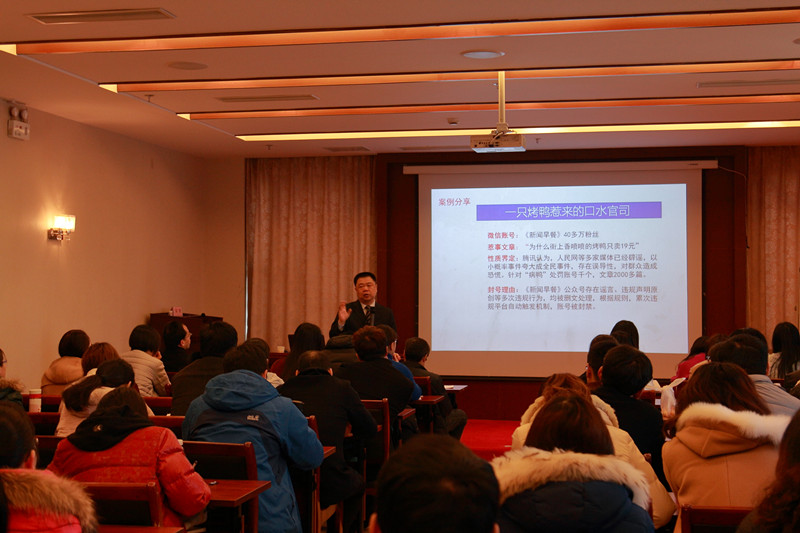
Course Benefits
1. Understand WeChat Official Account compliance requirements
2. Familiarize with content publishing requirements
3. Understand WeChat intellectual property complaint procedures
4. Enhance intellectual property awareness
5. Learn new advertising content regulations
6. Understand prohibited areas and bottom lines of the new advertising law
7. Master advertising restrictions for bank investment products
8. Establish content operation principles for advertising communication
Course Outline
Lecture 1: WeChat Official Account Operation Standards
I. Prohibition of Unauthorized Plugins
1. Unauthorized plugins
2. Unauthorized third-party tools
3. Non-compliant third-party tools
4. Prohibited mass messaging applications
II. Prohibition of Follower Manipulation
1. Mutual promotion of WeChat accounts
2. Fake follower generation
3. Nearby people scanning and greeting
4. Shake feature
5. Links, avatars, QR codes, etc.
III. Prohibition of Induced Sharing
1. Reward-based sharing
2. Forced sharing
3. Link redirects
4. Induced sharing
IV. Malicious Function Tampering
1. Public platform functions being tampered with
2. Public platform text being tampered with
3. Author location display being tampered with
4. Geographic location being self-generated
案例解析:
(1) Why was this WeChat account banned by Tencent?
(2)点赞和抢红包的“分享误区”
Lecture 2: WeChat Official Account Content Publishing Standards
I. Content Infringing Rights or Privacy
1. Unauthorized use of registered enterprise names or trademarks
2. Unauthorized use of others' names or avatars
3. Will result in account cancellation
II. Content Infringement Handling
1. Unauthorized distribution of others' original articles
2. Unauthorized distribution of others' ID numbers, photos, etc.
3. Fabricating facts to publicly defame others' character
4. Damaging others' reputation through defamation or slander.
5. Unauthorized distribution of enterprise trade secrets
6. First violation results in content deletion; serious violations result in account ban
III. Rumor Content Handling
1. Hearsay messages
2. Publishing unverified information
3. Malicious rumor creation
IV. Sensitive Political Information
1. Publishing content from non-news source websites
2. Quoting irresponsible content from influencers
3. Irresponsible content regarding the Party and the state
4. Information likely to cause social unrest
5. Content contradicting national religious policies
V. Illegal Content Screening
1. Pornographic content
2. Violent scenes
3. Organized crime and gambling-related content
4. Invoice trading
5. Selling counterfeit cigarettes and currency
6. Illegal document and seal production
VI. Fraudulent and False Advertising
1. Fraudulent advertisements aimed at defrauding money
2. False and exaggerated but clearly ineffective food and drug advertisements
3. Advertisements promoting the sale of counterfeit and shoddy goods.
Case Analysis
(1) Why are WeChat accounts repeatedly reported?
(2) Why does Tencent ban numerous political and economic WeChat accounts?
Lecture 3: Application of the New Advertising Law in WeChat Communication
I. Bank Investment Product Advertising Information
1. Must include risk warnings
(1) Potential risks
(2) Risk liability assumption
(3) Reasonable warnings or alerts
2. Regulations regarding promises
(1) Must not make guaranteed promises regarding future effects or returns,
(2) Strictly prohibited from explicitly or implicitly indicating principal protection, risk-free, or guaranteed returns
3. Other prohibited areas
(1) Must not use academic institutions, associations, or professionals to recommend products
(2) Must not use beneficiaries to recommend products
II. Advertising Endorser Restrictions and Penalties
1. Definition of advertising endorser
2. Restricted content for advertising endorsements
3. Civil liability for false advertising
4. Fines and 3-year endorsement ban
III. Electronic Information and Internet Advertising
1. Spam SMS and email restrictions
2. Online advertisements must have one-click close functionality
3. Must not harass users online
4. Online publishing platform restrictions
IV. Restrictions on Advertising Language
1、“最”字限制
2、“第一”限制
3、“级∕极”限制
4. Self-media first publication
5. Media reposting
V. Definition and Scope of False Advertising
1. Goods or services do not exist
2. Information does not match reality
3. Fabricated award situations
4. Exaggerated statistical data
案例解析:
(1) Analysis of why Wenzhou Bank of Communications was investigated
(2) Review of bank credit card business advertisements under the new advertising law
Lecture 4: Intellectual Property Protection Rules and Infringement Complaint Procedures
I. Intellectual Property Infringement Complaint System
1. Online complaints available
2. Tencent verification
3. Tencent takes action
4. Violators may face penalties up to account ban
II. Launch of Original Content Declaration Feature
1. Public account operators can make original content declarations
2. System performs intelligent comparison
3、通过后对文章添加“原创”标识
III. Scope of Intellectual Property Application
1. Principle of protecting registered trademarks
2. Principle of unique certification naming
3. Determine prohibited names
IV. Trademarks and Trade Dress
1. Public accounts must comply with intellectual property laws and regulations regarding trademarks and copyrights
2. Public accounts not owned by trademark owners or unauthorized accounts will be rejected
3. Using others' trademarks or copyrights requires providing relevant rights certificates or authorization
V. Payment Standards
1. Comply with the "WeChat E-commerce Service Agreement"
2. Comply with the "WeChat Pay User Service Agreement"
案例解析:
(1) Tencent Intellectual Property Online Complaint Procedure
(2) WeChat Bank "WeChat Security Manual" Template